DRX 2025: 8.6M$ in revenue and breaks even for the second year in a row
The 2022 World Champions have released their audited financial statements for fiscal year 2025. Positive net income, LCK franchise fees fully paid off, and a Kiwoom naming deal that couldn't have come at a better time. But the accumulated deficit is closing in on $20 million.
You need to be logged in to leave a comment.Log in with
sits ATU E-sports Growth Private Equity Fund #1, a South Korean investment fund holding the majority of both common and preferred shares. Around the table: Korea Development Bank (KDB), Shinhan Capital, Wemix Korea (the Korean blockchain publisher), several local VC funds, and — perhaps surprisingly — actor Bae Yong-joon (
The Legend
). DRX is, structurally, a financial asset backed by private equity, and has been so through multiple funding rounds.
Breaks even for two consecutive years
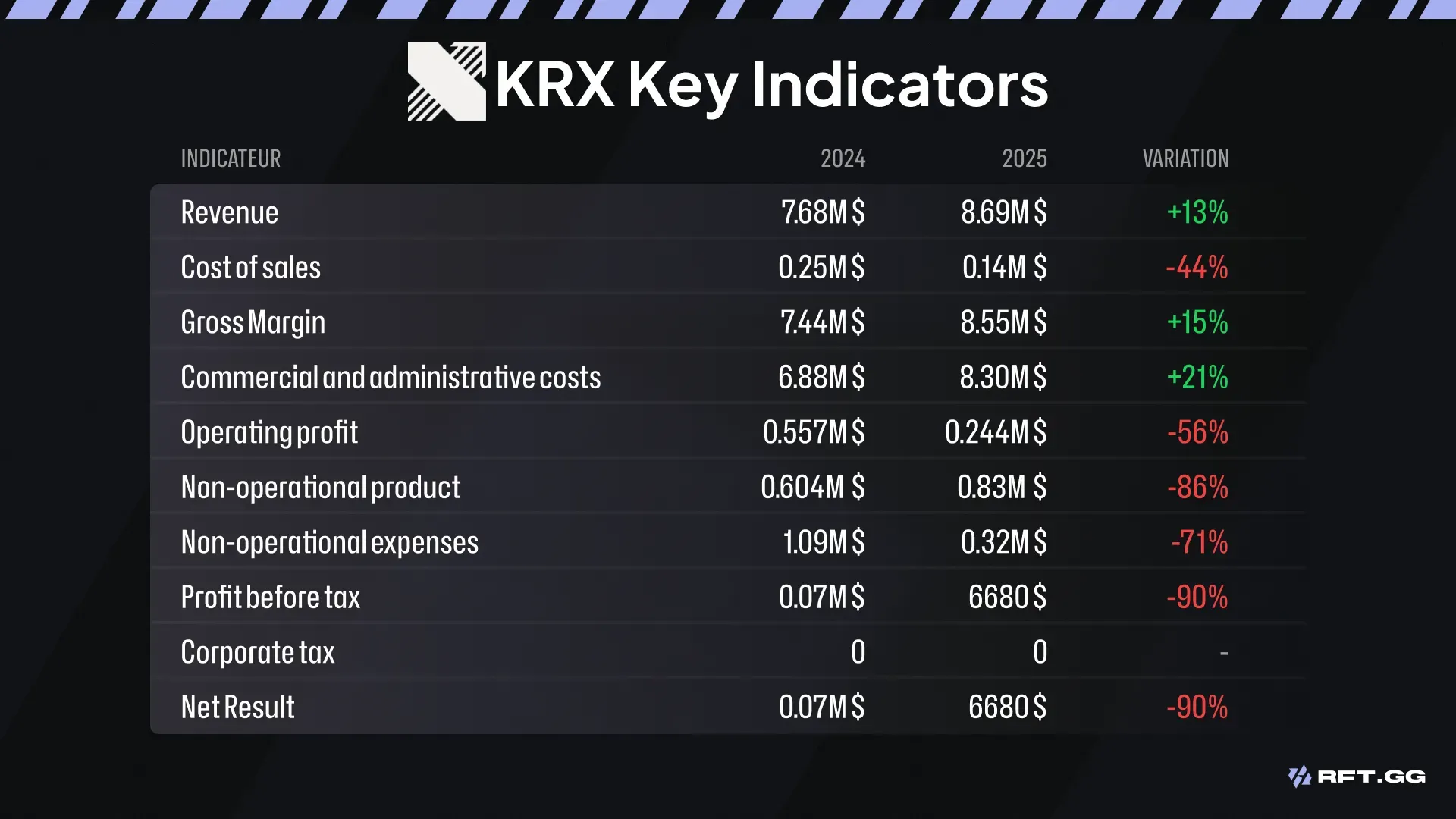
The club posts a positive net income for the second year running.
An unprecedented operational turnaround. Revenue is growing, operating profit stays positive, and net income — admittedly symbolic at $6,680 — crosses the break-even line.
Since inception, DRX has raised roughly $31M in capital from its investors. The accumulated deficit on the balance sheet now stands at $18.7M, against $8.86M of net equity.
Revenue breakdown: the end of the "IP model"?
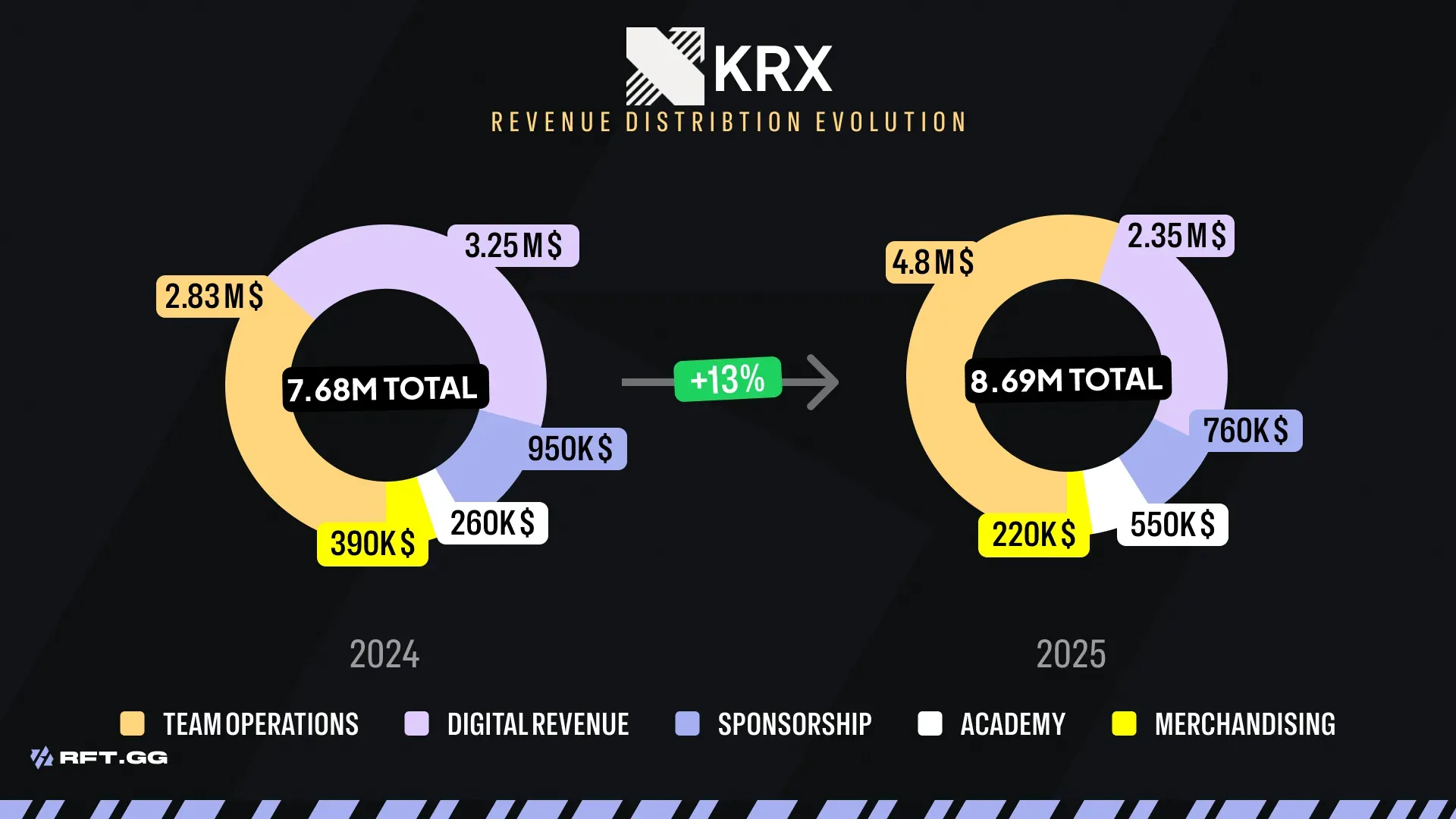
IP-driven revenue is clearly declining: Riot's share of digital cosmetics (Worlds team skins, VCT capsules, etc.) is down 28%, merchandising down 43%, sponsorship down 20%. The commercial value of the DRX brand has naturally eroded since the 2022 title, and it shows on every line tied to audience monetization.
Growth instead comes from prize money, direct Riot payouts, and content revenue. That compensates for the IP decline, but it remains entirely dependent on competitive results and on the publisher's level of commitment.
Rosters eat everything
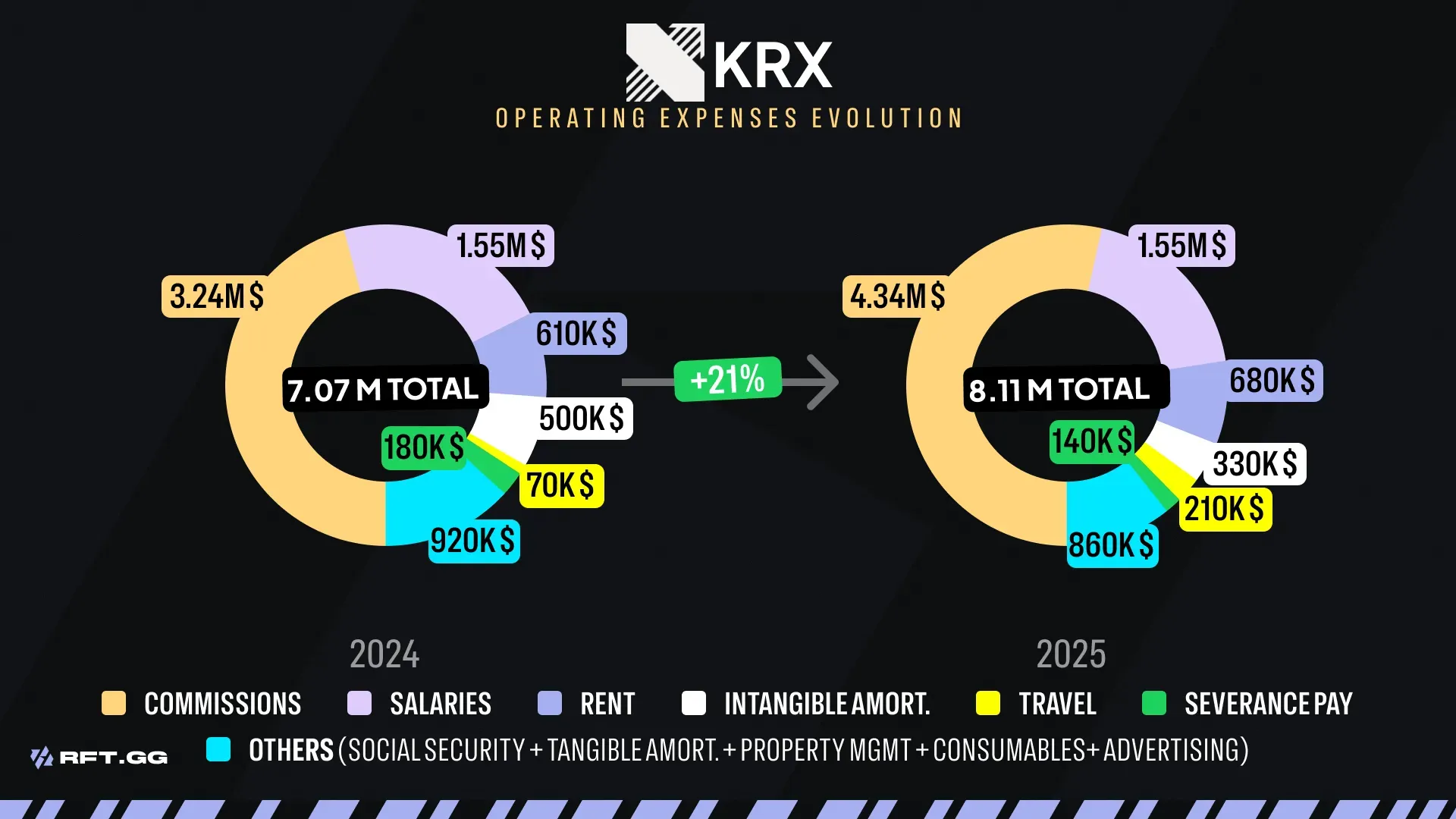
Operating costs rose 21% year-on-year, adding roughly $1.4M of expenses — absorbing almost the entirety of the revenue growth.
Player salaries are, unsurprisingly, the dominant line, representing half of the club's total revenue:
2024: $3.24M
2025: $4.34M (+34%)
Other lines:
Salaries (non-player): $1.55M, flat
Rent: $680K (+11%)
LCK franchise right amortization: $330K (down, thanks to the renegotiation)
Goodbye, LCK fees
This is the structural event of the 2024–2025 cycle for Korean LoL. When the LCK moved to a franchise model in 2021, each club committed to paying entry fees over several years. In DRX's case: roughly $6.76M, spread between December 2020 and December 2026.
To prevent a chain of franchise bankruptcies, the LCK cut franchise fees across the board by about a third (~$22.3M of relief on a $68M total at league level), redistributed 50% of league revenue to the clubs, and provided additional direct aid averaging $880K per club.
For DRX specifically, the renegotiation delivered a $2.48M saving. Without it, the club would be structurally loss-making. As of December 31, 2025, DRX has settled the remaining fees in full — no further payments owed to Riot Games Korea on this contract.
Kiwoom: waiting for 2026
In March 2025, DRX signed a naming partnership with Kiwoom Securities, one of South Korea's largest brokerages. The LCK team, now branded Kiwoom DRX, will play under the tri-code KRX for the 2026 season.
The deal barely shows up in the 2025 numbers: sponsorship revenue is actually down 20% on the year. The full Kiwoom effect will need to be watched on the 2026 financials.

 Get Premium