Inside NEO’s vision for EMEA Masters and LGC Rising
Photo Credit: Riot Games
A new organisation is shaping the EMEA tier-two League of Legends scene. New Esports Org. (NEO) runs two of the ecosystem's key League of Legends competitions — the EMEA Masters and League of Legends Game Changers Rising (LGC Rising) — alongside a wider portfolio that already includes Evo France and the EVA Pro League. Its founders sat down with RFT to explain where the company came from, how it sees these properties, and where it wants to take them.
NEO was born out of a leadership change. Bertrand Amar, who had led Webedia's esports activities since 2016 and helped create the LFL, left the company at the end of 2025. The split was amicable and, by his account, strategically clean. Webedia wanted to keep operating French-focused products like the LFL, while the more international and riskier projects fit less neatly into its plans. "We wanted to build the NEO adventure on products that look further than France," Amar said. He framed the new company around that ambition, founded in partnership with Mathieu Dallon, one of the founding figures of esports and the creator of the Esports World Cup (ESWC).
That international outlook is the reason NEO took over the EMEA Masters. The competition mattered deeply to Amar's team, which had nurtured it for years — through the LFL, its second division, and side products like the Coupe des Étoiles — before eventually taking on the EMEA Masters production itself. When the move to create NEO took shape, the team flagged its intentions to Riot Games early, and the handover happened naturally. "It's a competition we're extremely attached to," Amar said, calling it a major pillar in NEO's development and pointing to its trajectory, including last year's qualification pathway toward the
Comments (0)
You need to be logged in to leave a comment.Log in with
This year's Spring EMEA Masters was originally built around a more compact format than previous editions, and Yoann Bouchard, NEO's director, laid out the reasoning. The EMEA Masters had traditionally grown split by split — the basic idea being a one-week first split, a two-week second split, and a three-week third, with stakes and team counts rising toward the off-season. But 2026 reshuffled those priorities.
The Winter Split carried unusual weight because the EMEA region was the only one giving tier-two teams a path into the Road to EWC qualifiers — a rare chance for ERL sides to face LEC opposition and potentially qualify for an international event. He pointed to the strong runs of the two LFL teams that reached the EWC Qualifier through the EMEA Masters as proof of the concept. That inflated the Winter format and, in turn, scrambled the rest of the year: a Spring sandwiched between ERLs finishing just before and international events starting right after, with barely more than a week to work with. "All these elements put end to end mean we have to choose a more condensed format," Bouchard said.
He was candid about the trade-offs. A tighter format means fewer invited teams and fewer slots per ERL, which complicates allocation in what he called a still-fragile tier-two ecosystem — especially when a league's competitive level shifts sharply from one year to the next. NEO took the community feedback seriously. "It's not even impossible that we'll make changes soon," Bouchard said — and only days after the interview, NEO did exactly that, reworking the Spring format to expand the field to 28 teams and add a Swiss Play-In.
Broadcasting, offline, and what comes next for EM
On broadcasting, NEO has deliberately put its production resources into clean feeds for national broadcasters rather than an official English stream for example. Bouchard framed the EMEA Masters as a celebration of regional representation, with as many official broadcasts as there are ERLs. NEO produces fully finished feeds — overlays, stats, replays — so each national broadcaster only needs to add its own casters. He noted the English broadcast ranked only around sixth among national official broadcasts in recent editions, which made concentrating resources on the national feeds the more logical choice.
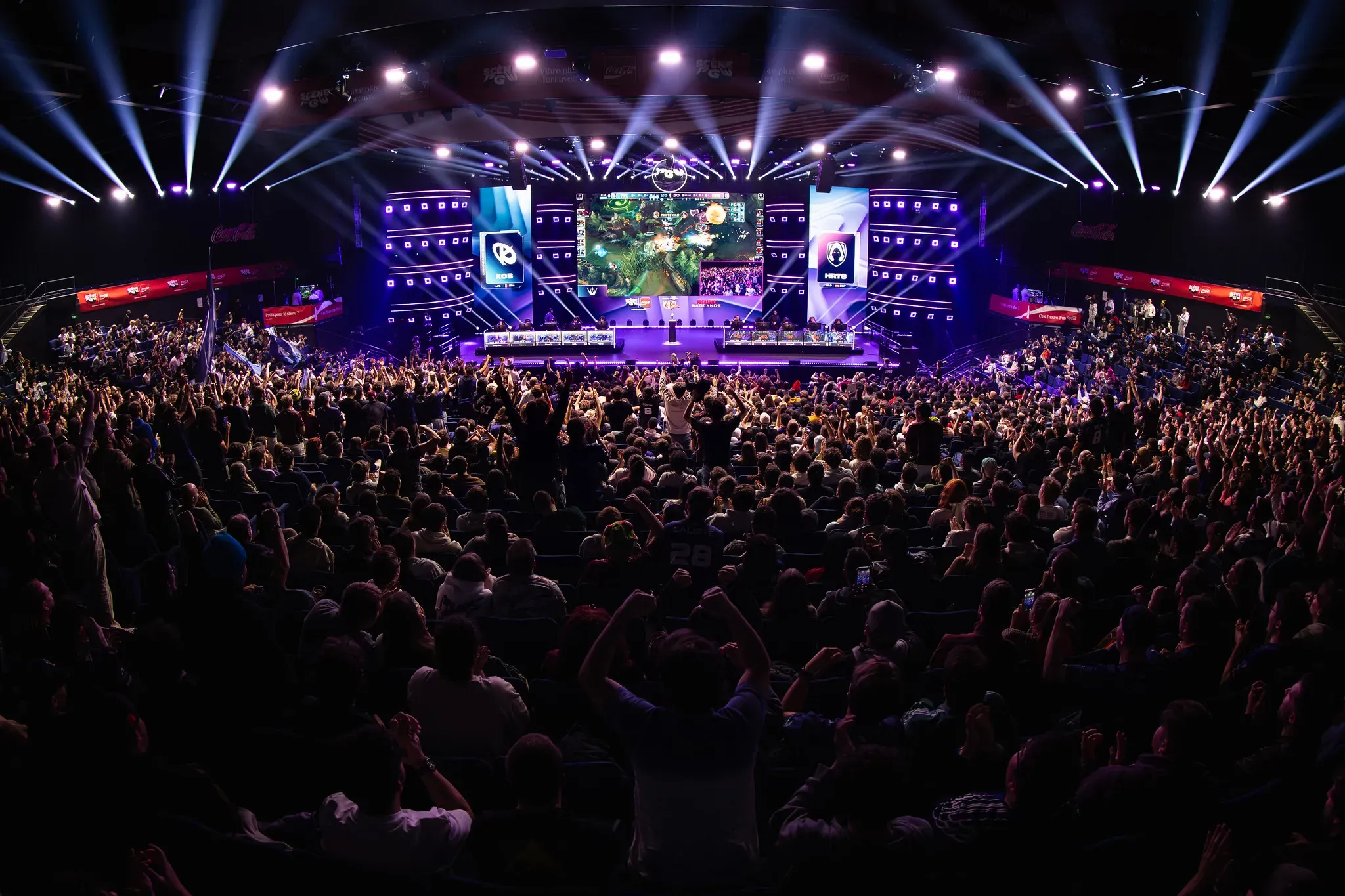
Offline remains an ambition. Amar, long an advocate for live events, confirmed the Paris Games Week — which hosted last year's final — is among this year's options, with discussions already under way for 2027, though nothing is locked in. His bigger dream goes beyond a single grand final. "If we manage to create an event where there isn't only the grand final," he said, the goal would be to bring as many teams as possible from the different ERLs onto the stage.
Photo Credit: Riot Games
As for stakes, NEO is hoping the EMEA Masters can keep feeding into something bigger. Last year, two teams qualified through the tournament as invited sides for the LEC Versus, and NEO would like to keep that door open. For now, though, much depends on Riot Games. "The ambition is obviously that the last split qualifies for something," Amar said. "For what, we don't know yet." Bouchard added that he would love every split to lead toward a larger goal — mirroring the Winter pathway to the EWC Qualifier — but was careful not to promise it, citing limited visibility on Riot's 2027 plans.
LGC Rising: building with the community, not over it
For Game Changers, NEO chose to take it steadily rather than rush. The organization's own late start meant tight timelines, but Bouchard said the team deliberately took time to consult community figures, gather learnings from the first LGC year, and talk with existing competitions like the Equal Esport Cup and the Nova Series, as well as players and teams.
The philosophy is integrative. "There's already this whole ecosystem, this fertile ground that exists and is great," Bouchard said. Rather than imposing a structure from above, NEO wanted to build with the existing community — listening to teams who need regularity and visibility, and to players who, simply, want to play more than one or two BO3s (best-of-three) before going home. The result is the LGC Rising 2026 format: an open competition spread across five months, with year-end Finals that tie in the Equal Esport Cup and the Nova Series. The longer-term aim, Bouchard added, is to align LGC more closely with the standard League of Legends calendar and launch it earlier in 2027.
NEO's commercial strategy for Game Changers is unlike its other properties. With the format now set and Laure Valée — one of the most prominent women in esports — to support them as an ambassador-like, Amar said the company is approaching partners with deliberately low-priced packages, framing them as a way to support and lend credibility to the ecosystem rather than simply tap into an audience. "A partner coming to a competition like the EMEA Masters or the LEC is looking for an audience. They're not necessarily coming to support an ecosystem," he said. The pitch to brands is explicit: those who want to contribute to the scene's growth, not just reach its viewers, will find Game Changers an ideal fit.
Photo Credit: Riot Games
The company is open about where the support comes from. Riot Games provides a framework, expertise and promotional reach — relaying announcements around Game Changers, for instance — but the financial investment sits mostly on NEO's side, leaving the company to convince partners to come aboard. On the competitive side, NEO is encouraged by early signals: rosters forming, teams returning to the scene, and reference organizations like SK and G2 confirming their participation. Bouchard also wants to build storytelling around the players and structures involved, to draw a wider audience to the competition.
There is a long-term commitment on the table. Both founders confirmed Game Changers will return in 2027, with a two-year license already in hand. The EMEA Masters, by contrast, currently runs on a one-year license —the writer of this article thinks it is probably because plans may shift. For partners, Amar argued, that durability matters: more tournaments across the year mean more visibility and more entry points, addressing the hesitation some structures and brands felt last year when the format was short and announced late.
A long-term bet
NEO is open about the economics. Asked whether these competitions pay off, Amar was direct: not today. "When you create a company, you have to invest," he said, while insisting it is the right bet. He pointed to League of Legends' stability and to 2027 as a potentially defining year for the game's renewal, and expressed confidence that both the EMEA Masters and Game Changers can become profitable within the next few years.
Bouchard echoed the long-term framing, while acknowledging the emotional pull of a scene he has worked in for roughly a decade — from the Challengers France in 2016 through the LFL, the ERLs and the EMEA Masters. The objective, he stressed, is not to deliver a single year and reassess, but to build coherent, lasting competitions that NEO fully owns as organizer. A two-year Game Changers license, he noted with a smile, is "two centuries in esports."
As for piling on more competitions, the answer is a measured no. NEO is not chasing quantity, Bouchard said, and the LFL — a league format very different from a competition like the EMEA Masters — is not on its radar. The priority is quality and focus: investing in the products NEO believes in most, and seeing them through properly. For a first year already crowded with League of Legends and other IPs, that discipline may be the clearest statement of intent.
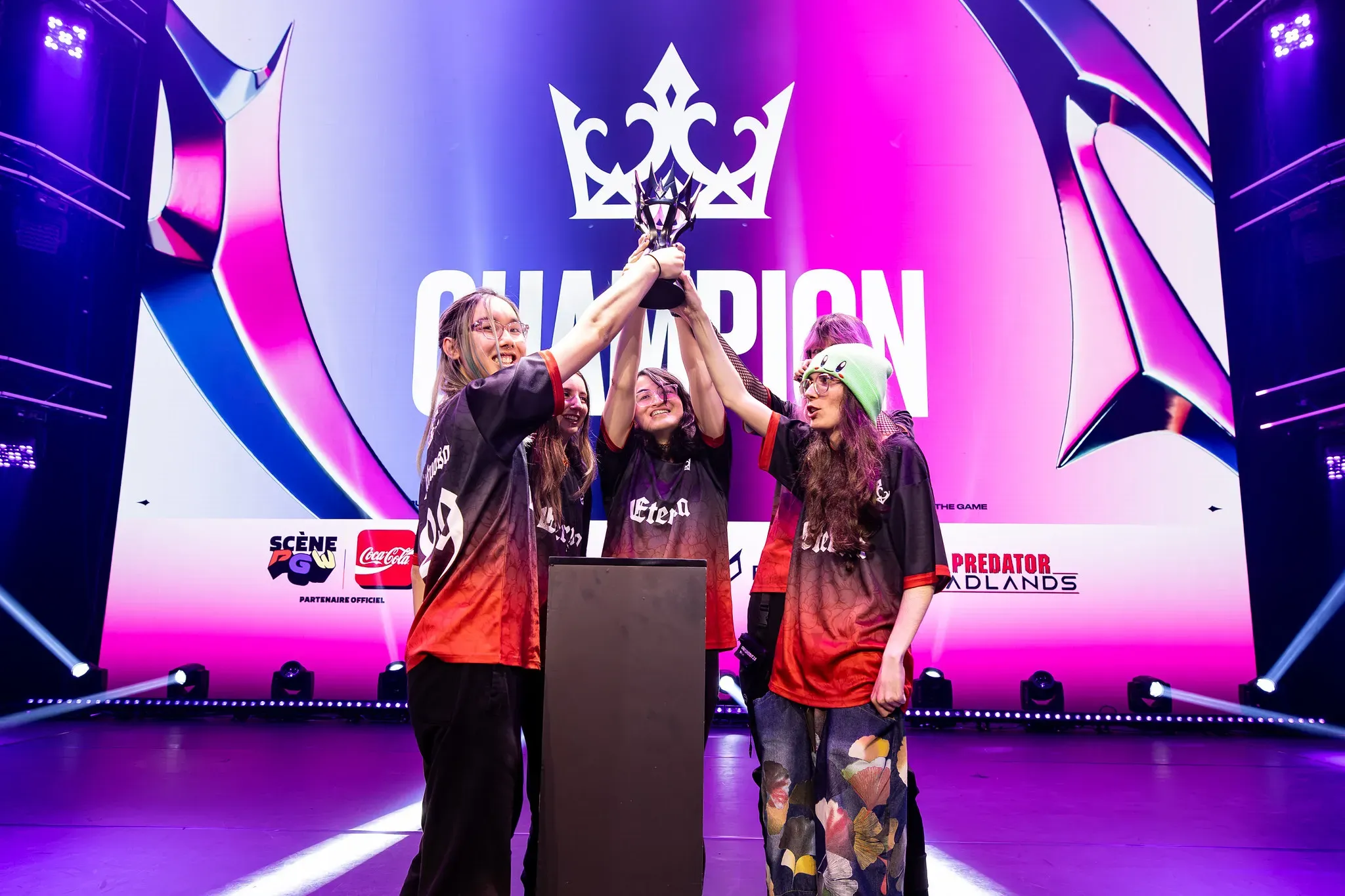
You can tune in tomorrow at 12 PM CEST for the kickoff of LGC Rising Stage 1 and find out who will take over from Eterna, last year’s champions.
Inside NEO’s vision for EMEA Masters and LGC Rising - DPM.LOL

 Get Premium